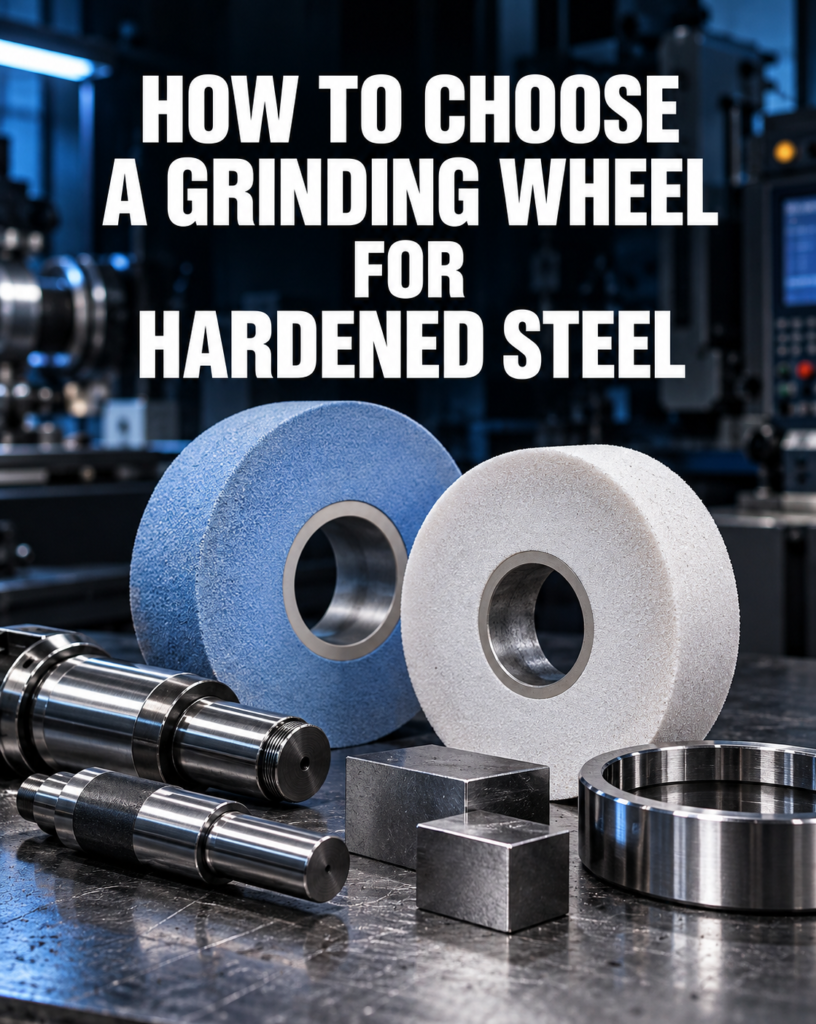
Grinding hardened steel requires the correct combination of abrasive grain, grit size, wheel grade, structure and bond.
The wrong wheel can generate excessive heat, glaze quickly or damage the workpiece. A correctly selected wheel will cut freely, maintain accuracy and reduce the risk of grinding burn.
Here are the main factors to consider.
Choose the Right Abrasive
White Aluminium Oxide
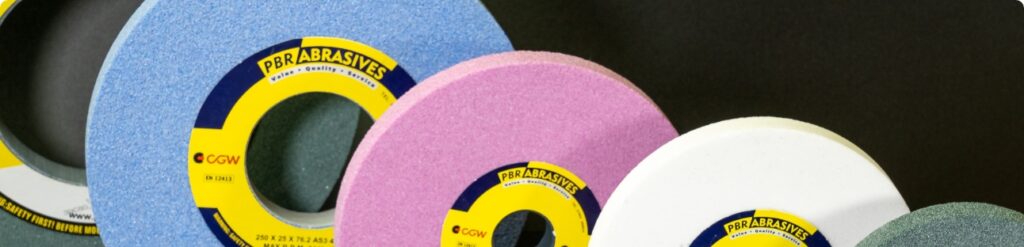
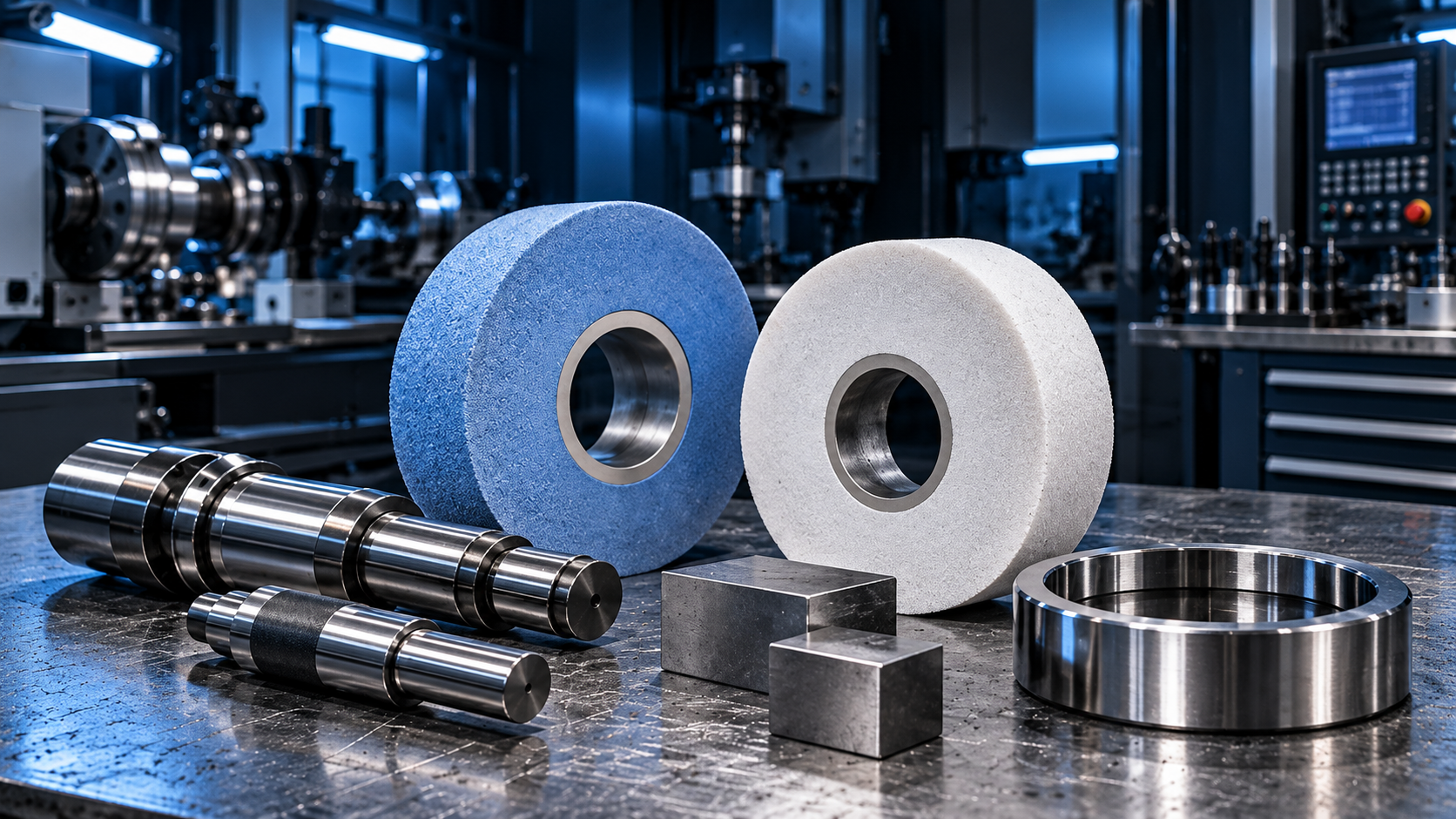
White aluminium oxide is a popular choice for hardened steel and high-speed-steel tools.
It is more friable than standard brown aluminium oxide, which means its grains break down more readily to expose fresh cutting edges. This creates a sharper, cooler cutting action.
White aluminium oxide is commonly used for:
- Hardened tool steel
- High-speed steel
- Heat-treated components
- Tool sharpening
- Surface grinding
- Cylindrical grinding
- Precision engineering
Pink or Ruby Aluminium Oxide
Pink and ruby aluminium oxide wheels provide a balance between toughness and friability.
They can retain their shape better than some white aluminium oxide wheels while still producing a relatively cool cut. This makes them suitable for toolroom and precision-grinding applications.
Ceramic Aluminium Oxide
Ceramic aluminium oxide is designed for demanding applications involving high stock removal, hardened components or production grinding.
Its microcrystalline grain continually exposes new cutting edges, helping the wheel remain sharp. Ceramic wheels can offer:
- Faster material removal
- Longer wheel life
- Cooler cutting
- Reduced dressing
- Improved production efficiency
Ceramic wheels usually require sufficient grinding pressure and machine power to activate their self-sharpening action.
CBN Grinding Wheels
Cubic boron nitride, or CBN, is an excellent option for grinding hardened ferrous materials.
CBN wheels are commonly used on:
- Hardened tool steels
- High-speed steel
- Bearing steel
- Hardened gears
- Automotive components
- High-volume production parts
CBN can provide excellent dimensional accuracy, long wheel life and low heat generation. Its higher initial cost makes it most suitable for precision or production applications where these benefits can be fully used.
Select the Correct Grit Size
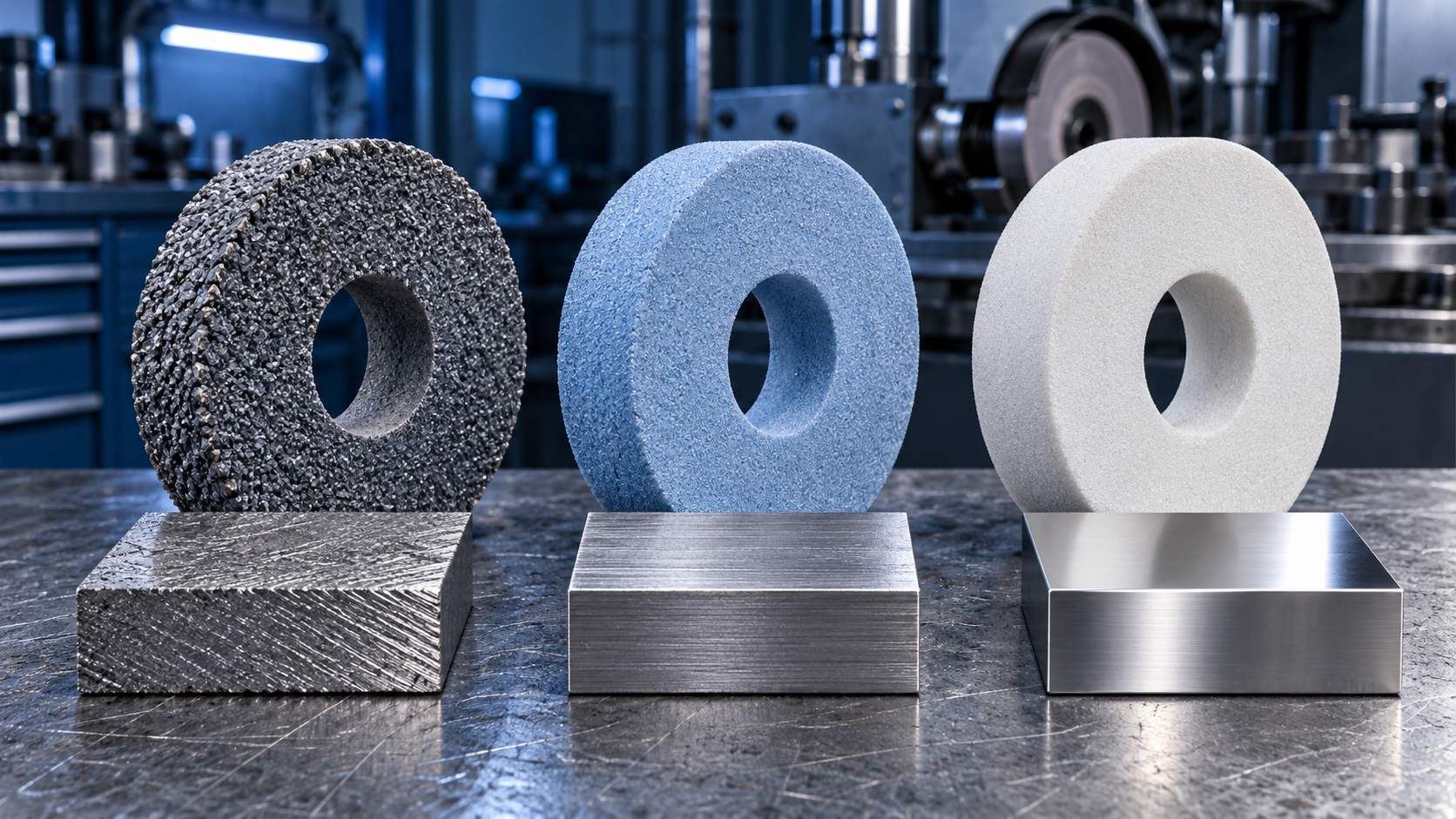
The grit size affects both material removal and surface finish.
As a general guide:
- Coarse grit: Faster stock removal and a rougher finish
- Medium grit: A balance between cutting speed and finish
- Fine grit: Smoother finish and greater precision
Medium grit sizes are commonly used for general grinding of hardened steel. Finer grits may be required for sharpening, finishing or close-tolerance work.
Choosing a grit that is too fine can increase heat because the abrasive may rub instead of cutting effectively.
Use a Softer Wheel Grade
Hard materials generally require a softer-grade grinding wheel.
This may appear contradictory, but hardened steel dulls abrasive grains quickly. A softer bond allows worn grains to break away and expose fresh, sharp cutting edges.
A wheel that is too hard may retain blunt grains and begin rubbing against the workpiece. This can cause:
- Glazing
- Excessive heat
- Grinding burn
- Discolouration
- Cracking
- Poor surface finish
- Increased grinding forces
A softer grade does not mean the abrasive itself is soft. Wheel grade describes how strongly the bond holds the abrasive grains.
Consider the Contact Area
The size of the contact area between the wheel and workpiece affects heat and grinding pressure.
A large contact area generally requires a softer-grade or more open-structure wheel. This helps the wheel release worn grains and allows coolant and swarf to escape.
A small contact area may permit a slightly harder or denser wheel.
Choose the Correct Bond
Vitrified bonds are commonly used for precision grinding of hardened steel.
They provide:
- Good form retention
- Accurate dressing
- Controlled porosity
- Consistent cutting performance
Resin-bonded wheels may be selected for higher-speed applications, heavy material removal or operations requiring greater toughness.
The correct bond will depend on the machine, wheel speed and grinding process.
Control Grinding Heat
Hardened steel can be damaged by excessive grinding heat.
Grinding burn may reduce surface hardness, introduce residual stresses or cause cracking. Discolouration can be a visible warning, but thermal damage is not always easy to see.
To control heat:
- Use a sharp, free-cutting wheel
- Select an appropriate softer grade
- Dress the wheel correctly
- Avoid an unnecessarily fine grit
- Use the correct feed and depth of cut
- Apply coolant effectively
- Keep the coolant clean
- Check that the wheel is not glazing
If burn continues, review the complete process rather than simply reducing the feed rate.
Dress the Wheel Regularly
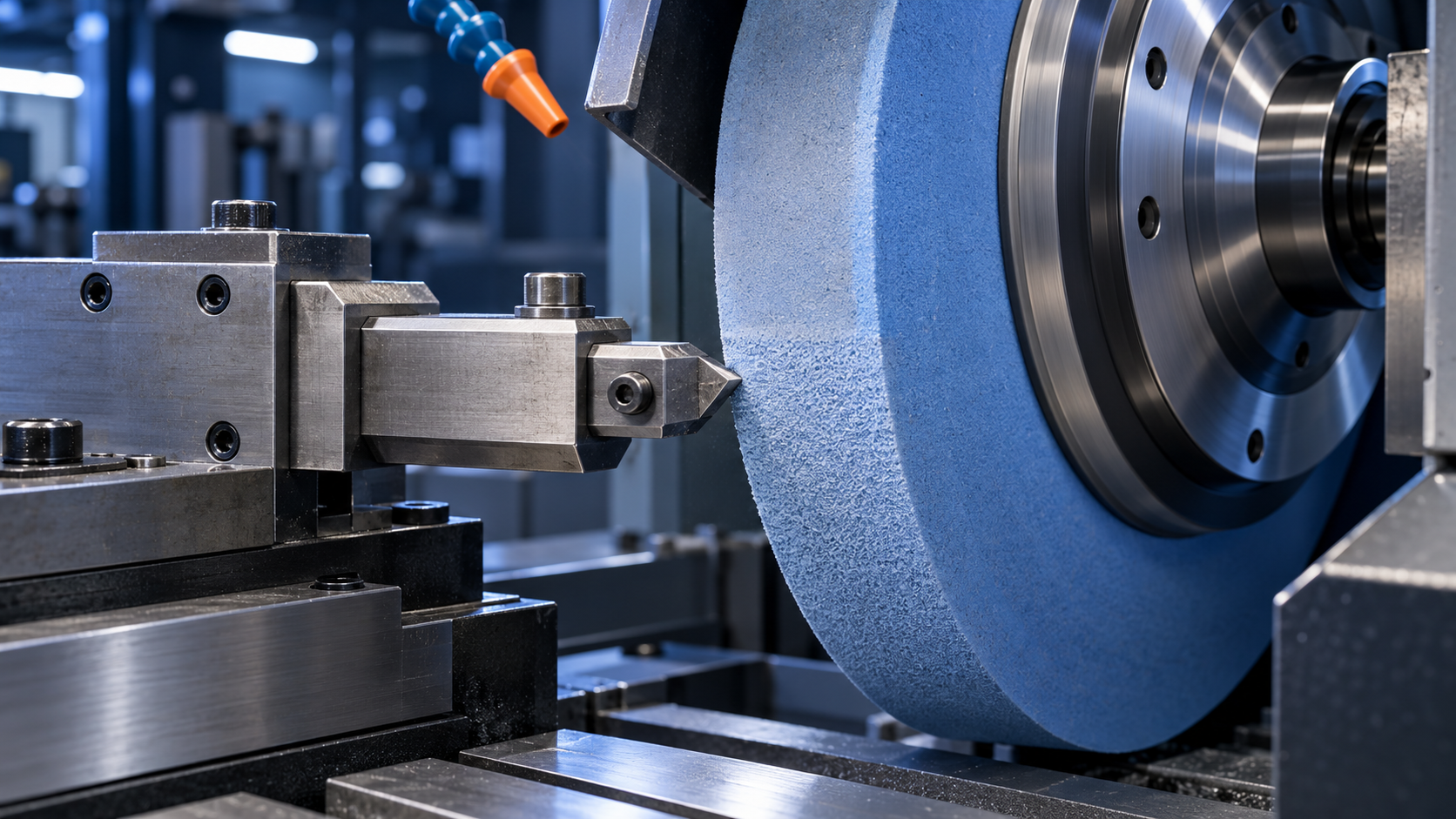
Dressing removes dull abrasive grains and embedded material while restoring the wheel’s cutting surface and profile.
Signs that dressing may be required include:
- A shiny or glazed wheel surface
- Increased grinding pressure
- Reduced material removal
- Excessive heat
- Vibration or chatter
- Poor surface finish
The dressing tool, depth and frequency should match the wheel specification and required finish.
Common Selection Mistakes
Choosing a Wheel That Is Too Hard
A hard-grade grinding wheel may retain dull grains, causing rubbing, heat and possible damage to the hardened component.
Using Too Fine a Grit
An unnecessarily fine grit may increase contact points and heat generation. Select the coarsest grit capable of producing the required finish.
Choosing by Wheel Colour Alone
Colour may indicate the abrasive type, but it is not a reliable substitute for checking the complete wheel specification.
Ignoring Machine Capability
A premium ceramic or CBN wheel may not perform correctly if the machine lacks the required power, rigidity, speed control or dressing equipment.
Grinding-Wheel Safety
Before using any grinding wheel:
- Confirm that it is suitable for hardened steel
- Check the wheel dimensions and bore
- Inspect it for cracks, chips or damage
- Carry out the appropriate ring test where applicable
- Never exceed the maximum operating speed
- Use the correct flanges and mounting procedure
- Fit and adjust the machine guards
- Wear suitable personal protective equipment
- Follow the wheel and machine manufacturers’ instructions
Never use a damaged or unidentified grinding wheel.
Frequently Asked Questions
What is the best grinding wheel for hardened steel?
White aluminium oxide is a good general choice. Ceramic aluminium oxide is suitable for demanding production work, while CBN can be ideal for high-precision or high-volume applications.
Should I use a soft or hard wheel grade?
Hardened steel normally requires a softer wheel grade so that dull grains are released and replaced by fresh cutting edges.
Why does hardened steel burn during grinding?
Common causes include a wheel that is too hard, an excessively fine grit, poor dressing, incorrect feeds and speeds or inadequate coolant delivery.
Can silicon carbide grind hardened steel?
Silicon carbide can remove steel, but it is generally not the best choice for hardened ferrous materials. Aluminium oxide, ceramic grain or CBN is usually more suitable.
Find the Right Wheel for Hardened Steel
Choosing a grinding wheel for hardened steel involves balancing cutting performance, wheel life, heat control and the required finish.
White aluminium oxide is suitable for many general applications. Ceramic grain can improve productivity in demanding operations, while CBN offers excellent performance for precision and production grinding.
PBR Abrasives supplies grinding wheels for hardened steel, toolrooms, precision engineering and production applications.
Contact our team with details of your material, hardness, machine, wheel dimensions and required finish. We can help identify the most suitable specification.