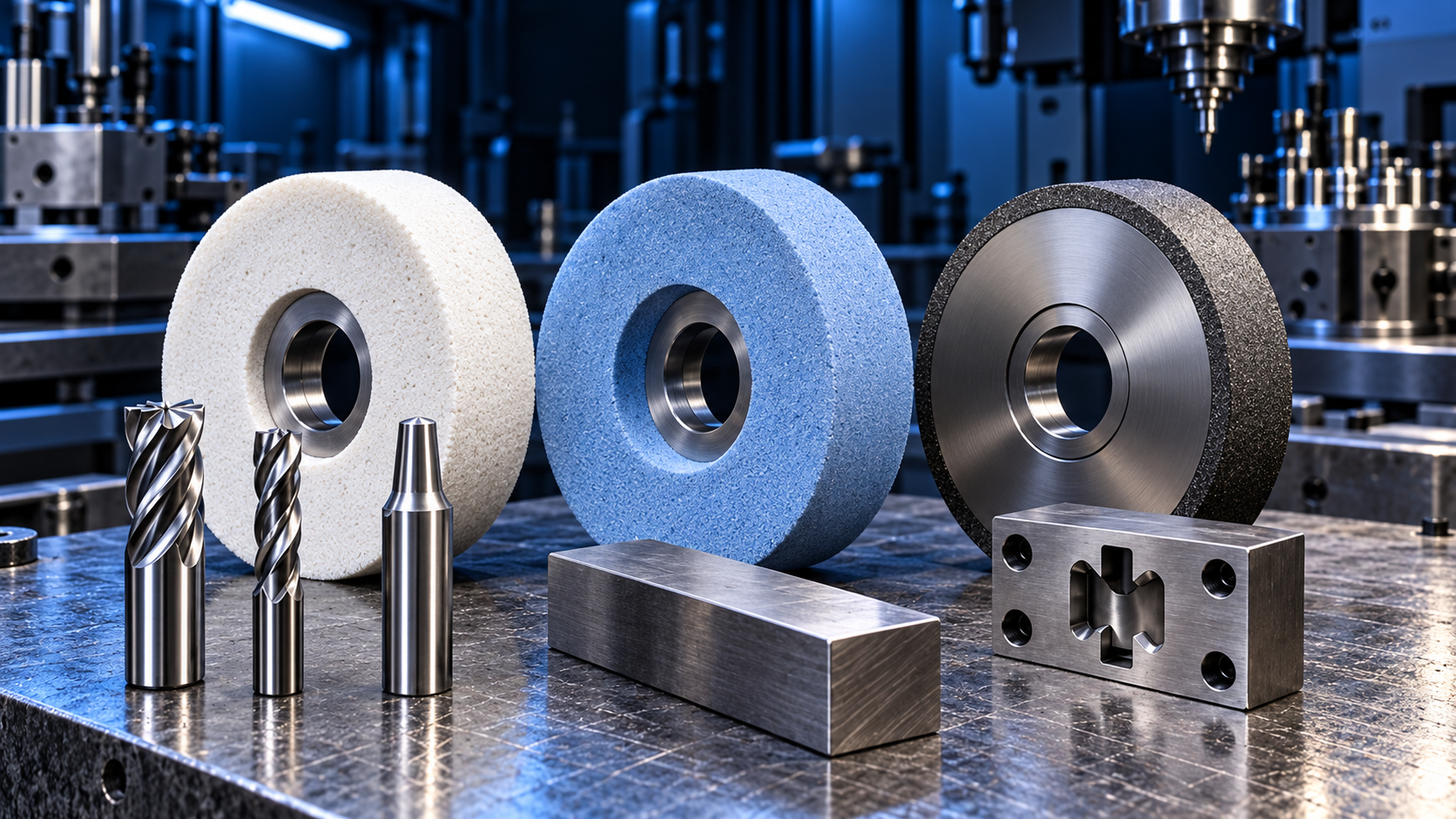
Tool steel is designed to offer excellent hardness, strength and wear resistance. These properties make it ideal for cutting tools, dies, moulds and precision components, but they can also make it difficult to grind.
Choosing the correct grinding wheel helps control heat, maintain accuracy and produce a consistent finish without damaging the component.
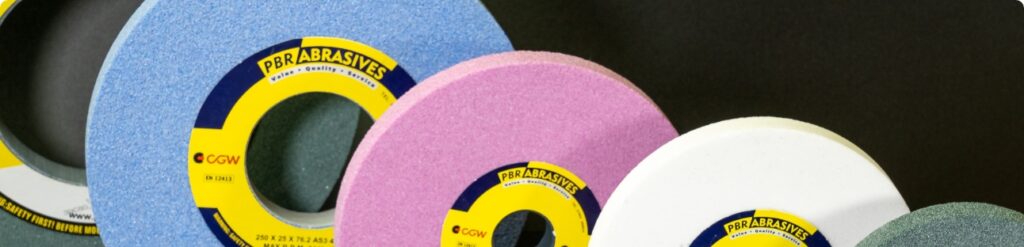
White Aluminium Oxide Wheels
White aluminium oxide is one of the most popular abrasives for grinding tool steel.
It is more friable than standard brown aluminium oxide, meaning its grains break down more readily and expose fresh cutting edges. This creates a sharp, relatively cool cutting action.
White aluminium oxide wheels are commonly used for:
- Hardened tool steel
- High-speed-steel tools
- Drill bits
- Cutting tools
- Chisels
- Dies and punches
- Surface grinding
- Toolroom grinding
They provide a good balance between performance, accuracy and cost, making them suitable for many general tool-steel applications.
Pink and Ruby Aluminium Oxide Wheels
Pink and ruby aluminium oxide wheels combine cutting ability with improved grain toughness.
They can retain their shape better than some white aluminium oxide wheels while still offering a relatively cool cut.
These grinding wheels are often selected for:
- Precision tool grinding
- Form grinding
- Sharpening applications
- Hardened steel components
- Jobs requiring improved profile retention
The correct choice will depend on the steel grade, hardness and required finish.
Ceramic Aluminium Oxide Wheels
Ceramic aluminium oxide is designed for demanding production and high-stock-removal applications.
Its microcrystalline grain fractures in a controlled way, continually exposing sharp cutting edges. This self-sharpening action can provide:
- Faster material removal
- Longer wheel life
- Cooler grinding
- Reduced dressing
- Improved productivity
Ceramic wheels are particularly useful when conventional aluminium oxide wheels wear too quickly or struggle to maintain an effective cut.
However, they normally require sufficient grinding pressure and machine power to work correctly.
CBN Grinding Wheels
Cubic boron nitride, or CBN, is one of the best options for precision grinding hardened tool steel.
CBN retains its cutting ability at high temperatures and can provide excellent dimensional accuracy and wheel life.
It is commonly used for:
- Hardened tool steel
- High-speed steel
- Punches and dies
- Hardened cutting tools
- Precision components
- Production grinding
CBN wheels are more expensive than conventional wheels, but their longer service life, reduced dressing and consistent performance can lower the overall cost per component.
Which Abrasive Should You Choose?
| Application | Recommended abrasive |
| General tool-steel grinding | White aluminium oxide |
| Precision tool grinding | Pink, ruby or white aluminium oxide |
| Heavy stock removal | Ceramic aluminium oxide |
| Hardened tool steel production | Ceramic or CBN |
| High-speed-steel tools | White aluminium oxide or CBN |
| High-precision components | CBN |
The abrasive type is only one part of the wheel specification. Grit size, wheel grade, structure and bond must also suit the application.
Choosing the Correct Grit
Grit size affects both material removal and surface finish.
- Coarse grit: Faster stock removal with a rougher finish
- Medium grit: A balance between cutting speed and finish
- Fine grit: Smoother finish and greater precision
Avoid selecting an unnecessarily fine grit. Too many cutting points can increase friction and heat, potentially causing grinding burn.
Choose a Softer Wheel Grade
Hard tool steels generally require a softer-grade grinding wheel.
A softer bond allows dull abrasive grains to break away and expose fresh cutting edges. This keeps the wheel cutting freely.
A grinding wheel that is too hard may glaze and begin rubbing against the component, causing:
- Excessive heat
- Discolouration
- Grinding burn
- Poor surface finish
- Increased grinding pressure
- Possible cracking
Wheel grade describes the strength of the bond, not the hardness of the abrasive.
Control Heat During Grinding
Tool steel can lose hardness or suffer surface damage if excessive heat is generated.
To help prevent grinding burn:
- Use a sharp, free-cutting wheel
- Select the correct wheel grade
- Dress the wheel regularly
- Avoid excessive grinding pressure
- Use the correct feeds and speeds
- Apply coolant effectively where required
- Keep the coolant clean
- Avoid unnecessarily fine grit sizes
If the wheel becomes shiny or stops cutting efficiently, it may be glazed and require dressing.
Grinding-Wheel Safety
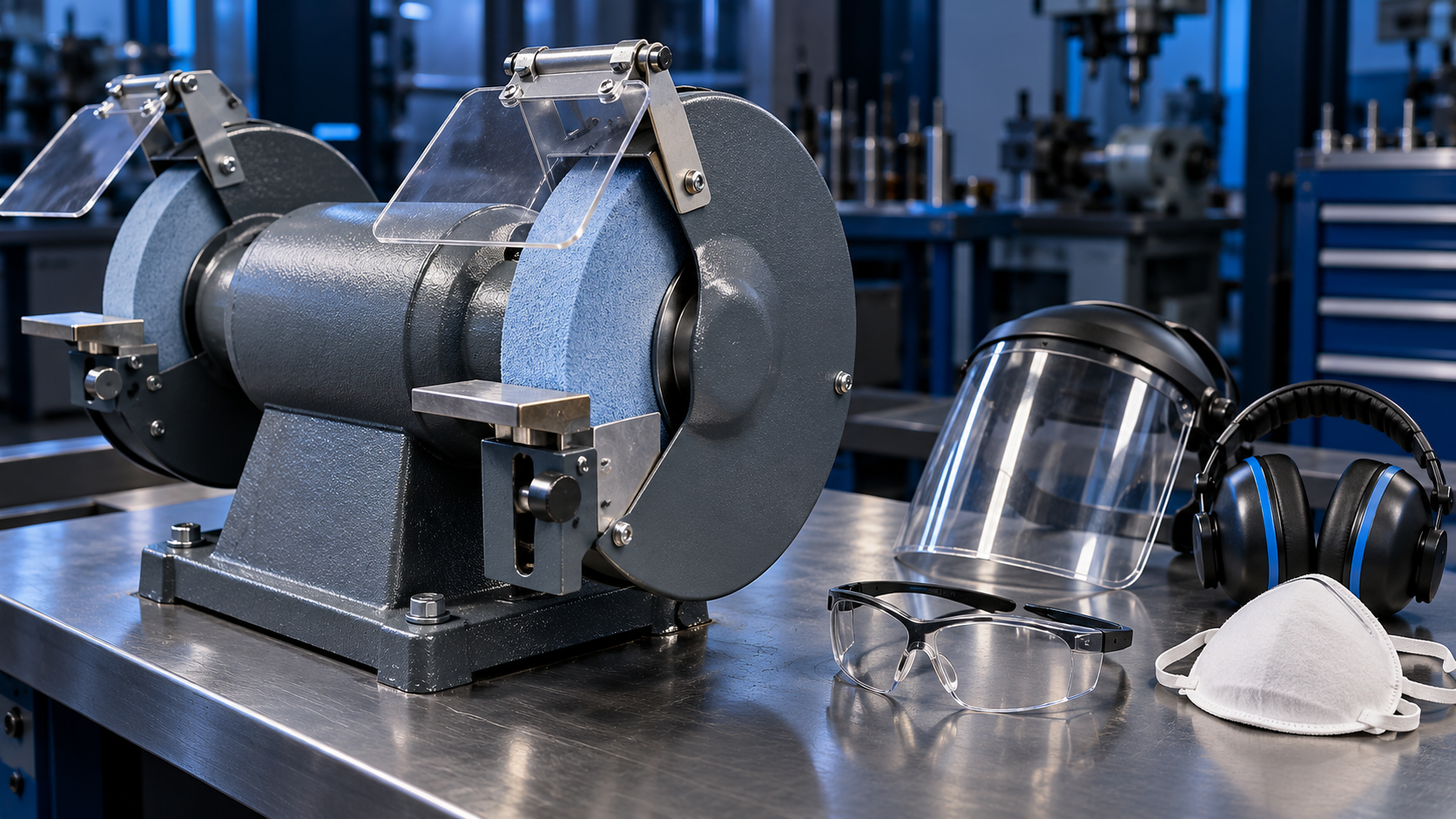
Before using any grinding wheel:
- Confirm it is suitable for the material
- Check the wheel dimensions and bore
- Inspect it for cracks or damage
- Carry out the appropriate ring test where applicable
- Never exceed the maximum operating speed
- Use the correct mounting flanges
- Fit and adjust all guards
- Wear suitable personal protective equipment
- Follow the manufacturers’ instructions
Never use a damaged or unidentified grinding wheel.
Which Grinding Wheel Is Best?
For most general tool-steel grinding, white aluminium oxide is an excellent starting point.
Ceramic aluminium oxide is worth considering for demanding production work or high material-removal rates. CBN is often the best option for precision grinding hardened tool steel where accuracy, consistency and wheel life justify the higher initial cost.
PBR Abrasives supplies grinding wheels for toolrooms, precision engineering and production applications.
Contact our team with details of your tool-steel grade, hardness, machine, wheel dimensions and required finish. We can help identify the most suitable grinding-wheel specification.