Aluminium oxide and silicon carbide are two of the most commonly used abrasives in grinding wheels. Although they can be used for similar processes, their properties make them suitable for different materials and applications.
As a general rule, aluminium oxide is used for grinding steel and other high-tensile ferrous metals. Silicon carbide is commonly selected for cast iron, non-ferrous metals, carbide and many non-metallic materials.
This guide explains the main differences and helps you choose the correct abrasive for your application.
What Is an Aluminium Oxide Grinding Wheel?
Aluminium oxide is a tough and durable synthetic abrasive. Its grains can withstand relatively high grinding pressures without breaking down too quickly.
This makes aluminium oxide particularly suitable for materials with high tensile strength, including:
- Mild steel
- Carbon steel
- Alloy steel
- Tool steel
- High-speed steel
- Wrought iron
- Steel castings and forgings
- Stainless steel, when the wheel is specifically approved for it
Aluminium oxide wheels offer a good balance between material removal, surface finish, wheel life and cost. They are widely used for bench grinding, surface grinding, tool sharpening, weld removal and general engineering.
What Is a Silicon Carbide Grinding Wheel?
Silicon carbide is harder and sharper than conventional aluminium oxide, but it is also more brittle.
Its grains fracture comparatively easily during grinding, exposing fresh cutting edges. This produces a sharp, free-cutting action without requiring excessive grinding pressure.
Silicon carbide wheels are commonly used on:
- Cast iron
- Aluminium
- Brass
- Bronze
- Copper
- Cemented carbide
- Tungsten carbide
- Glass
- Ceramics
- Stone
- Rubber
- Plastics and composite materials
The wheel must still be specifically approved for the material being ground. Not every silicon carbide wheel is suitable for every non-ferrous or non-metallic application.
Aluminium Oxide vs Silicon Carbide
| Feature | Aluminium oxide | Silicon carbide |
| Grain characteristic | Tough and durable | Hard, sharp and brittle |
| Best suited to | Steel and high-tensile ferrous metals | Cast iron, non-ferrous metals, carbide and non-metallic materials |
| Grain breakdown | Slower and controlled | Fractures more readily |
| Grinding pressure | Handles higher pressure well | Cuts effectively with lighter pressure |
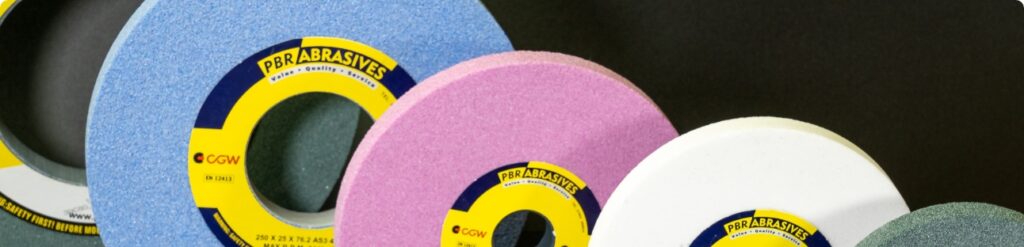
| Common colours | Brown, white, pink or ruby | Black or green |
| Typical specification letter | A | C |
Why Is Aluminium Oxide Better for Steel?
Steel has relatively high tensile strength and often creates significant grinding pressure.
Aluminium oxide grains are tough enough to resist premature fracture while continuing to cut effectively. Silicon carbide is harder, but its more brittle grains can break down too quickly when used on high-tensile steel.
Typical aluminium oxide applications include:
- Removing welds from steel
- Sharpening high-speed-steel tools
- Surface grinding
- Cylindrical grinding
- Bench grinding
- Fettling steel castings
- General engineering maintenance
Different steels may require different aluminium oxide formulations.
White aluminium oxide, for example, is more friable than standard brown aluminium oxide. It exposes fresh cutting edges more readily and can provide a cooler cut on hardened or heat-sensitive steels.
Why Is Silicon Carbide Used for Non-Ferrous Materials?
Many non-ferrous metals have lower tensile strength than steel. Some, including aluminium, are also relatively soft and can quickly clog or load an unsuitable wheel.
The sharp cutting action of silicon carbide can penetrate these materials effectively without relying on excessive pressure.
However, aluminium requires particular care. Aluminium swarf can become embedded in an unsuitable wheel, creating friction and potentially dangerous heat build-up.
Only use a grinding wheel that the manufacturer specifically identifies as suitable for aluminium or other non-ferrous metals.
Which Grinding Wheel Is Best for Cast Iron?
Silicon carbide is commonly recommended for grinding cast iron.
Cast iron has lower tensile strength than most steels, and the sharp, friable silicon carbide grain can cut it effectively without creating unnecessary pressure.
Typical applications include:
- Fettling cast components
- Removing casting marks
- Cleaning foundry components
- Removing scale and imperfections
- Surface grinding cast iron
The ideal wheel will depend on the type of cast iron, material-removal rate, contact area and required finish.
Which Wheel Is Best for Carbide?
Green silicon carbide has traditionally been used for grinding and sharpening carbide tools.
It is generally purer, sharper and more friable than black silicon carbide, making it suitable for cemented carbide, tungsten carbide, ceramics and other hard, brittle materials.
For demanding production or precision applications, diamond grinding wheels may provide improved accuracy, cutting performance and wheel life.
Black vs Green Silicon Carbide
Black Silicon Carbide
Black silicon carbide is typically used for:
- Cast iron
- Non-ferrous metals
- Stone
- Rubber
- Plastics
- General silicon carbide grinding
Green Silicon Carbide
Green silicon carbide is generally purer and more friable. It is commonly selected for:
- Cemented carbide
- Tungsten carbide
- Glass
- Ceramics
- Other hard and brittle materials
Wheel colour should only be treated as a guide. Always check the complete specification and manufacturer’s application information.
How to Identify the Abrasive
The wheel specification usually includes a letter identifying the abrasive type:
- A commonly indicates aluminium oxide
- C commonly indicates silicon carbide
For example, a wheel marked A 46 K 7 V may indicate:
- A: Aluminium oxide
- 46: Grit size
- K: Wheel grade
- 7: Wheel structure
- V: Vitrified bond
Manufacturer coding systems can vary, so always check the product documentation.
Which Grinding Wheel Should You Choose?
Choose Aluminium Oxide When:
- Grinding mild, carbon or alloy steel
- Sharpening high-speed-steel tools
- Working with high-tensile ferrous metals
- Carrying out general steel fabrication
- A tough and durable abrasive is required
Choose Silicon Carbide When:
- Grinding cast iron
- Working with an approved non-ferrous metal
- Sharpening carbide-tipped tools
- Grinding glass, ceramics or stone
- Working with hard and brittle non-metallic materials
- A sharp, free-cutting abrasive is needed
The abrasive type is only one part of the specification. You must also consider the grit size, wheel grade, structure, bond, operating speed, contact area and required finish.
Common Selection Mistakes
Using Silicon Carbide for General Steel Grinding
Silicon carbide is harder than aluminium oxide, but that does not automatically make it better for steel. Its brittle grains can wear too quickly under the pressure generated when grinding high-tensile materials.
Using a Standard Steel Wheel on Aluminium
A wheel designed for steel may load rapidly when used on aluminium. This reduces cutting efficiency, creates heat and can present a serious safety risk.
Always use a wheel specifically approved for aluminium.
Choosing a Wheel by Colour Alone
Wheel colour may indicate the abrasive type, but manufacturers also use colours to identify different formulations and product ranges. Always check the full specification.
Grinding-Wheel Safety
Before mounting or using a grinding wheel:
- Confirm that it is suitable for the workpiece material
- Check that its dimensions and bore match the machine
- Inspect it for cracks, chips or other damage
- Carry out the appropriate ring test where required
- Never exceed the maximum operating speed
- Use the correct mounting flanges
- Fit and adjust all machine guards
- Wear suitable eye, face, hearing and respiratory protection
- Follow the wheel and machine manufacturers’ instructions
Never use a damaged or unidentified grinding wheel.
Frequently Asked Questions
Is silicon carbide better than aluminium oxide?
Neither is universally better. Aluminium oxide is normally best for steel, while silicon carbide is better suited to cast iron, non-ferrous metals, carbide and many non-metallic materials.
Can silicon carbide be used on steel?
It can remove steel, but it is usually not the most economical choice. Its brittle grains may wear quickly under the grinding pressure.
Can aluminium oxide be used on aluminium?
A standard aluminium oxide wheel designed for steel should not automatically be used on aluminium. Use a wheel specifically approved for grinding aluminium.
Which abrasive is best for stainless steel?
Specialist aluminium oxide, zirconia alumina and ceramic abrasives are commonly used on stainless steel. The product should be clearly identified as suitable for stainless steel.
What do A and C mean on a grinding wheel?
The letter A commonly identifies aluminium oxide, while C generally identifies silicon carbide.
Find the Right Grinding Wheel
Choosing between aluminium oxide and silicon carbide begins with the material being ground.
Aluminium oxide is generally preferred for steel and other high-tensile ferrous metals. Silicon carbide is commonly selected for cast iron, carbide, approved non-ferrous metals and non-metallic materials.
PBR Abrasives supplies grinding wheels for precision engineering, production environments, toolrooms, foundries and general industrial applications.
If you are unsure which wheel you need, contact our team with details of your material, machine, wheel dimensions and required finish. We can help you identify the most suitable specification.