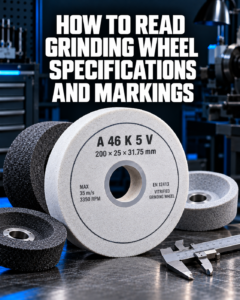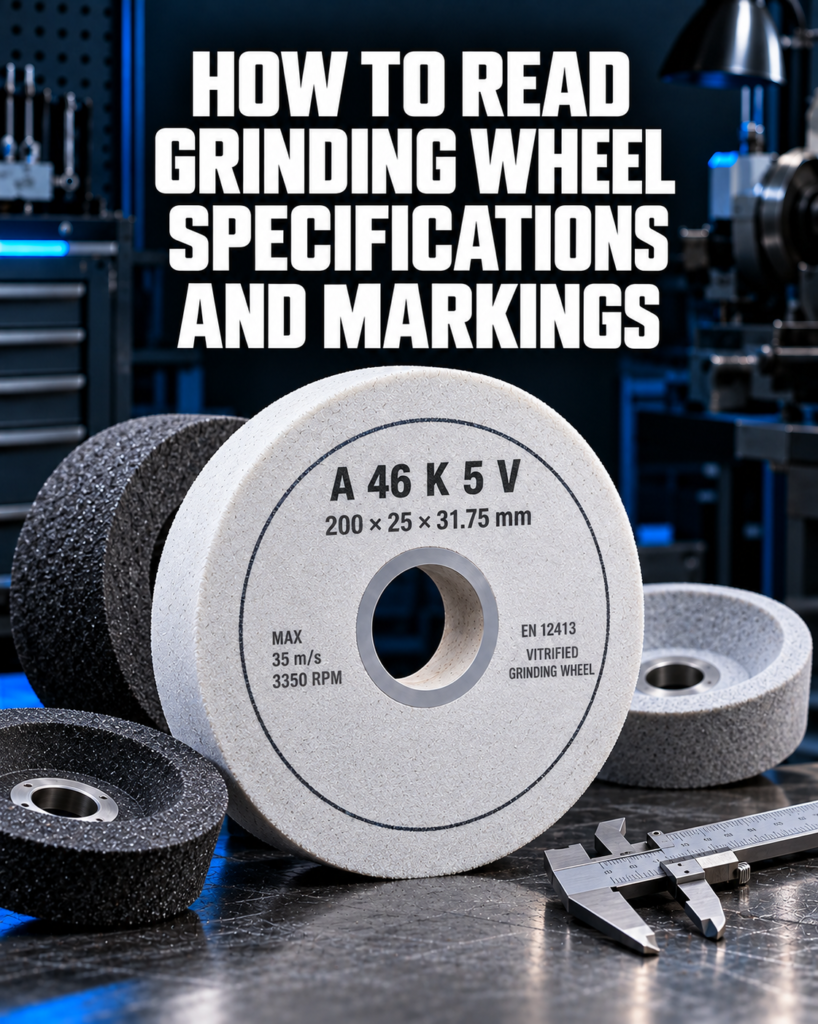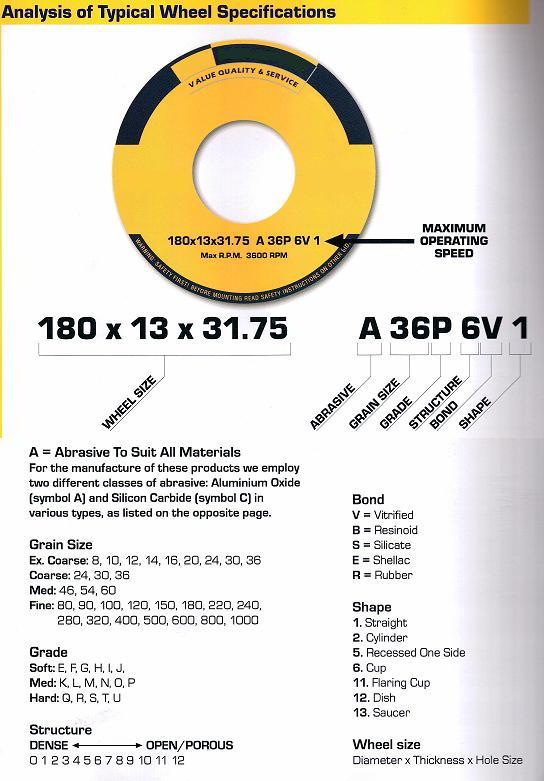
The letters and numbers printed on a grinding wheel provide important information about its size, construction and intended use. Understanding these markings helps you choose the correct wheel and operate it safely.
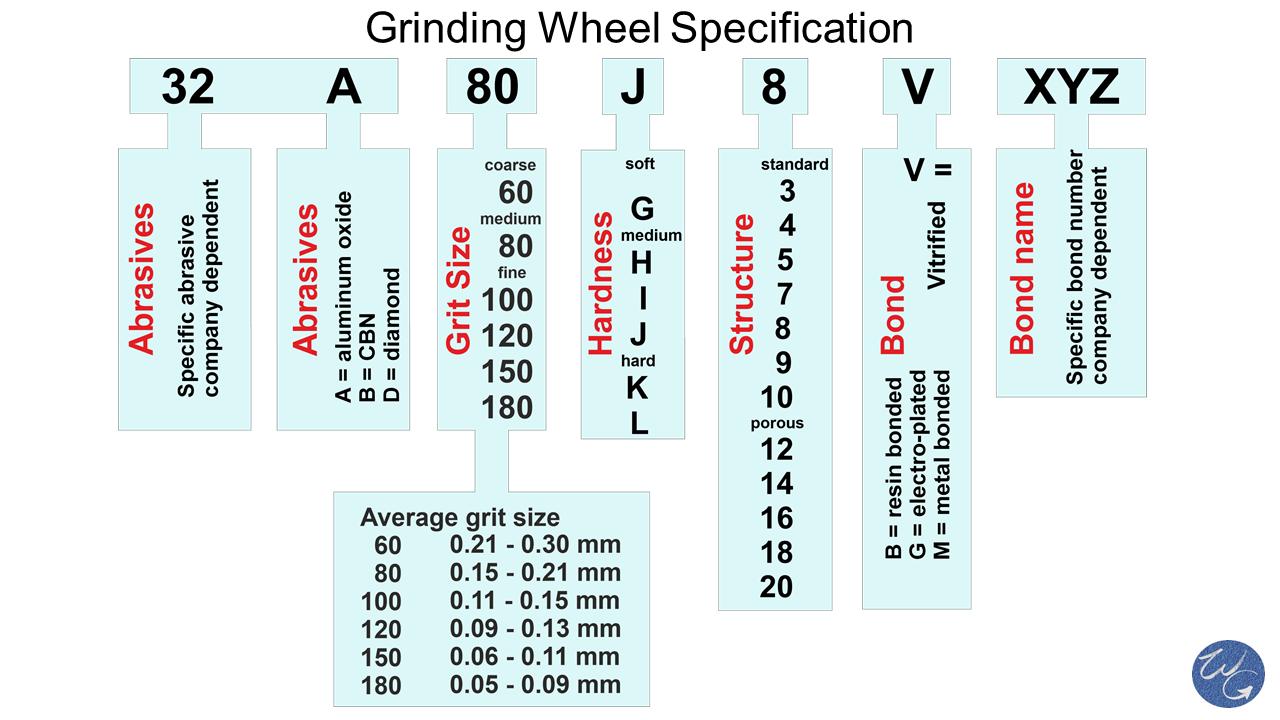
A typical grinding wheel specification may look like this:
A 46 K 5 V
Each part of this code describes a different feature of the wheel.
A – Abrasive type
The first letter identifies the abrasive material.
- A – Aluminium oxide, commonly used for steel
- C – Silicon carbide, often used for cast iron and non-ferrous metals
- D – Diamond, suitable for carbide, ceramics and glass
- B or CBN – Cubic boron nitride, used for hardened steels and specialist alloys
46 – Grit size
The number represents the size of the abrasive particles.
- Lower numbers indicate a coarser grit for rapid material removal
- Higher numbers indicate a finer grit for smoother finishing
Typical grit sizes range from very coarse wheels below 24 grit to fine wheels of 100 grit and above.
K – Wheel grade
The grade shows how strongly the bonding material holds the abrasive grains.
Grades normally run from A to Z:
- Earlier letters represent softer grades
- Later letters represent harder grades
A softer grade is often used for harder materials because worn abrasive grains are released more easily, exposing fresh cutting edges.
5 – Wheel structure
The structure number describes the spacing between the abrasive grains.
- Lower numbers indicate a denser structure
- Higher numbers indicate a more open structure
Open-structure wheels provide additional space for swarf and can help reduce heat during grinding.
V – Bond type
The final letter identifies the bonding material holding the grinding wheel together.
- V – Vitrified bond
- B – Resinoid bond
- R – Rubber bond
- E – Shellac bond
- M – Metal bond
Vitrified and resinoid bonds are among the most commonly used options.
Understanding Wheel Dimensions
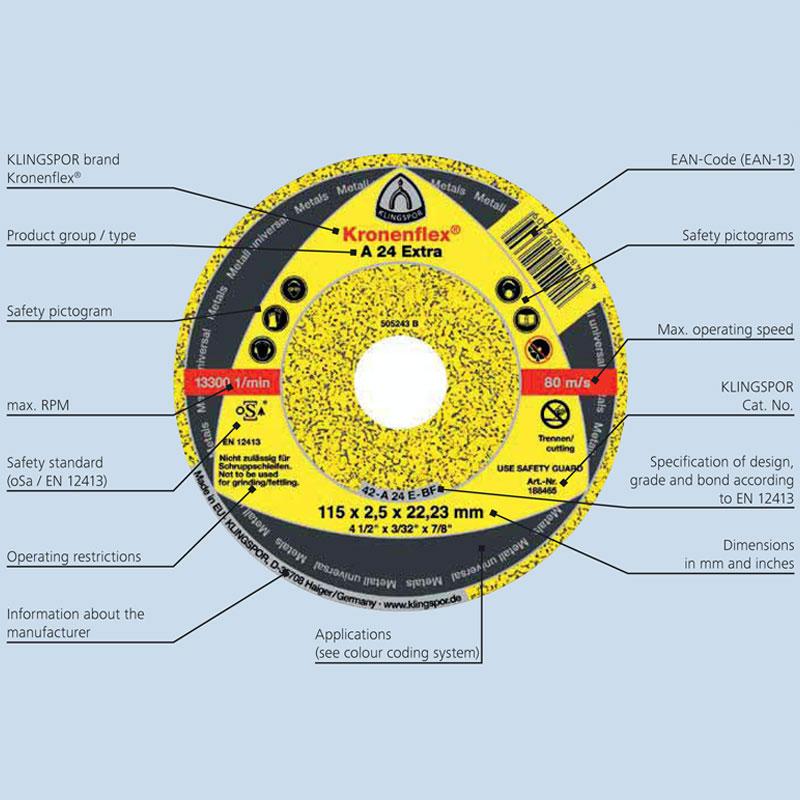
A wheel may also display measurements such as:
200 × 25 × 31.75 mm
These figures normally represent:
- Outside diameter
- Wheel thickness
- Bore diameter
All three measurements must be compatible with the grinding machine.
Wheel Type and Shape
Grinding wheels can also carry a type number identifying their shape. Common examples include:
- Type 1 – Straight grinding wheel
- Type 5 – Recessed on one side
- Type 7 – Recessed on both sides
- Type 11 – Taper cup wheel
- Type 27 – Depressed-centre grinding wheel
The correct shape depends on the machine and the grinding operation being performed.
Maximum Operating Speed
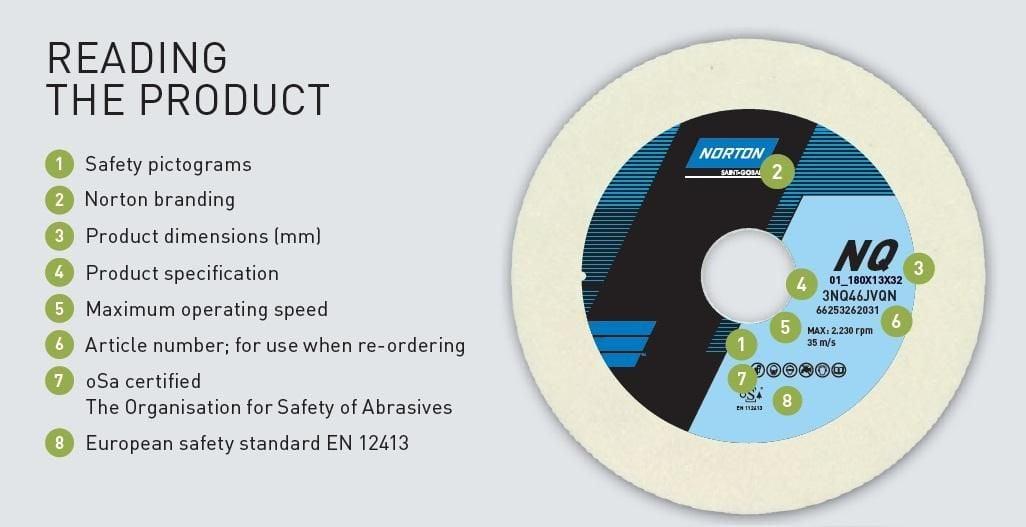
Always check the wheel’s stated maximum operating speed, shown as an RPM or metres-per-second rating. The machine must never operate faster than the maximum speed marked on the wheel.
Before fitting any grinding wheel, inspect it for damage and confirm that its dimensions, specification and speed rating are suitable for the machine.
Need Help Choosing a Grinding Wheel?
Grinding wheel markings may appear complicated, but each code provides valuable information about how the wheel will perform.
If you are unsure how to interpret a specification or need help finding the correct wheel, contact PBR Abrasives. Our experienced team can recommend a suitable grinding wheel for your material, machine and application.