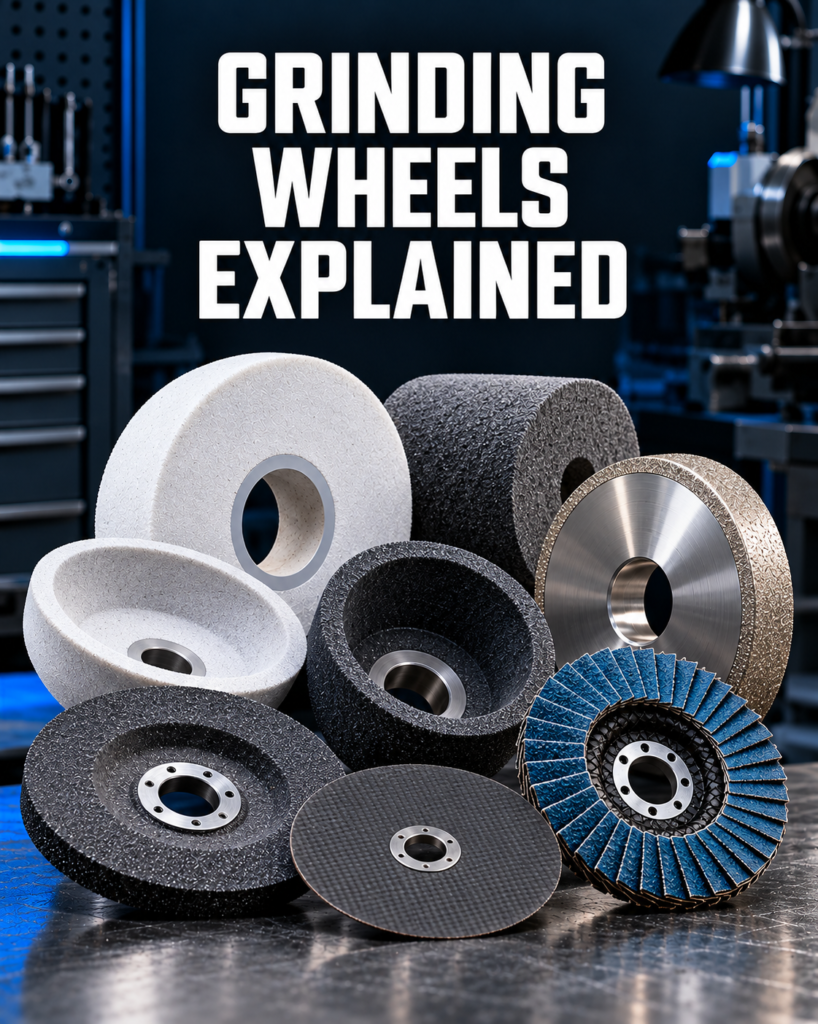
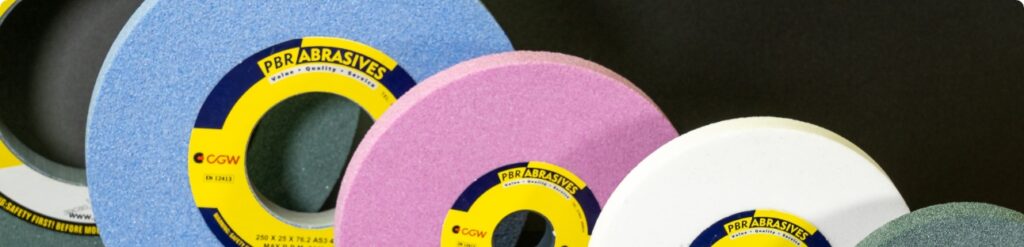
Grinding wheels are available in many different types, each designed for particular materials, machines and applications. Choosing the correct wheel can improve cutting performance, achieve a better finish and extend the life of both the wheel and your equipment.
Here are some of the most common grinding wheel types and where they are typically used.
Straight Grinding Wheels
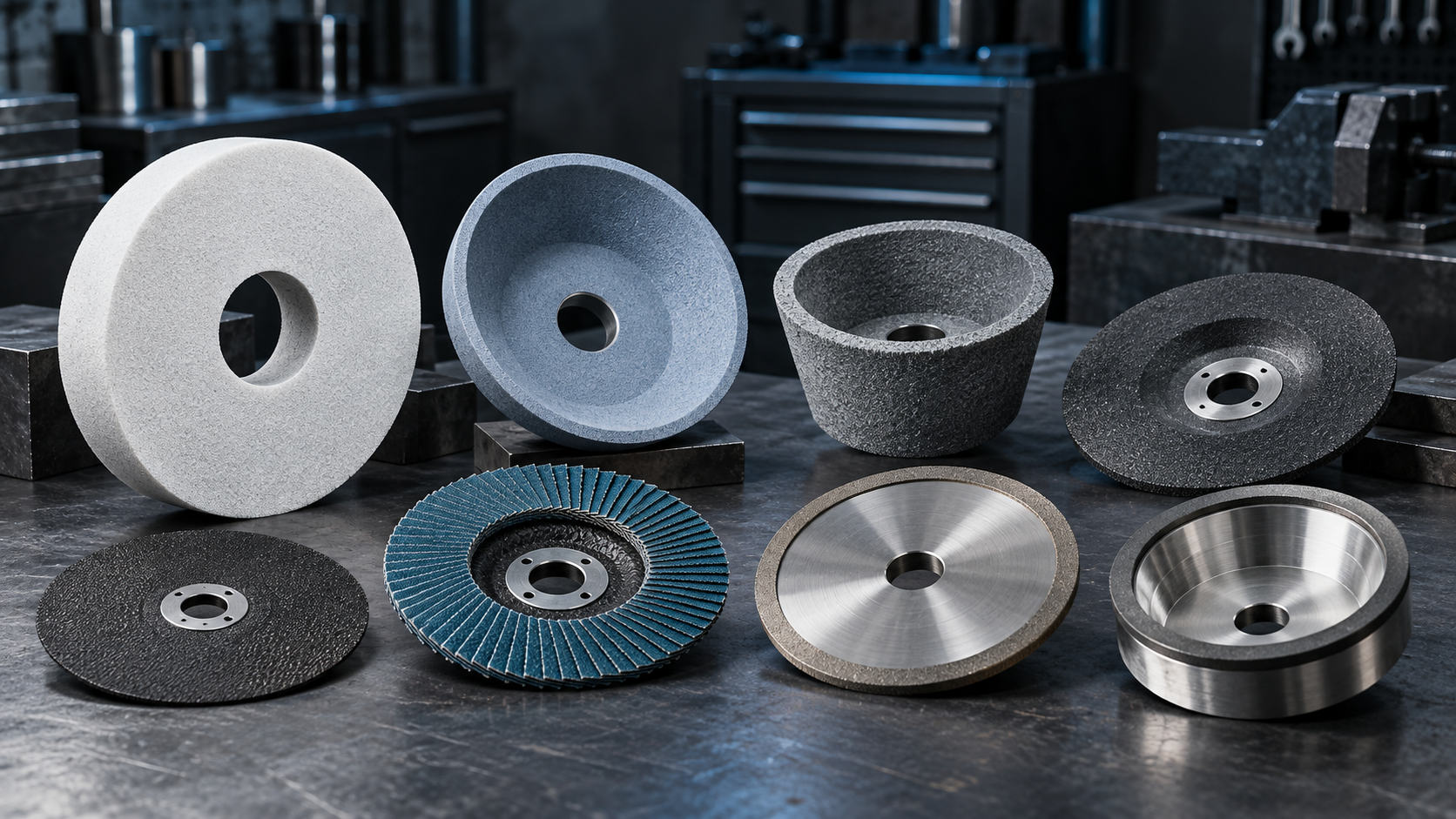
Straight wheels are one of the most widely used types. They are commonly fitted to bench grinders, pedestal grinders and surface grinding machines.
Typical applications include:
- Sharpening tools
- Removing material
- Surface grinding
- General workshop use
They are available in various diameters, thicknesses, abrasive materials and grit sizes.
Cylinder and Ring Wheels
Cylinder and ring wheels have a large grinding surface and are generally used on vertical or horizontal spindle machines. They are often selected for producing flat, smooth surfaces on larger components.
Dish Grinding Wheels
Dish wheels have a shallow, dish-shaped profile. They are commonly used for sharpening cutting tools, grinding gear teeth and completing precision work where access and control are important.
Cup Grinding Wheels
Cup wheels provide a broad grinding surface and are frequently used for heavy-duty stock removal, surface preparation and tool sharpening. Diamond cup wheels are also widely used for grinding concrete, masonry and other hard materials.
Depressed-Centre Grinding Wheels
Also known as Type 27 wheels, depressed-centre wheels are designed for use with angle grinders. Their recessed centre allows the wheel to be mounted securely while providing the correct working angle.
They are commonly used for:
- Weld removal
- Edge grinding
- Surface preparation
- Deburring
- General metal fabrication
Cutting and Slitting Discs
Cutting discs are thin abrasive wheels designed to cut through materials rather than grind their surfaces. They are commonly used on metal, stainless steel, stone and masonry.
Because they are thinner than grinding wheels, they must always be used correctly and never for side grinding unless specifically designed for it.
Flap discs consist of overlapping abrasive sections attached to a backing plate. They combine grinding and finishing in one product, making them suitable for weld blending, deburring, rust removal and surface preparation.
Flap Discs
Different grit sizes allow the operator to choose between aggressive material removal and a smoother finish.
Diamond Grinding Wheels
Diamond is one of the hardest abrasive materials available. Diamond wheels are commonly used for grinding carbide, ceramics, glass, stone and other hard or brittle materials.
They are not normally recommended for standard steel grinding because the heat generated can affect the diamond abrasive.
CBN Grinding Wheels
Cubic boron nitride, usually known as CBN, is particularly effective when grinding hardened steels and high-performance alloys. CBN wheels offer excellent heat resistance, accuracy and wheel life, making them suitable for precision engineering applications.
Choosing the Correct Grinding Wheel
Before choosing a wheel, consider:
- The material being ground
- The amount of material to remove
- The finish required
- The grinding machine being used
- The wheel dimensions and bore size
- The machine’s operating speed
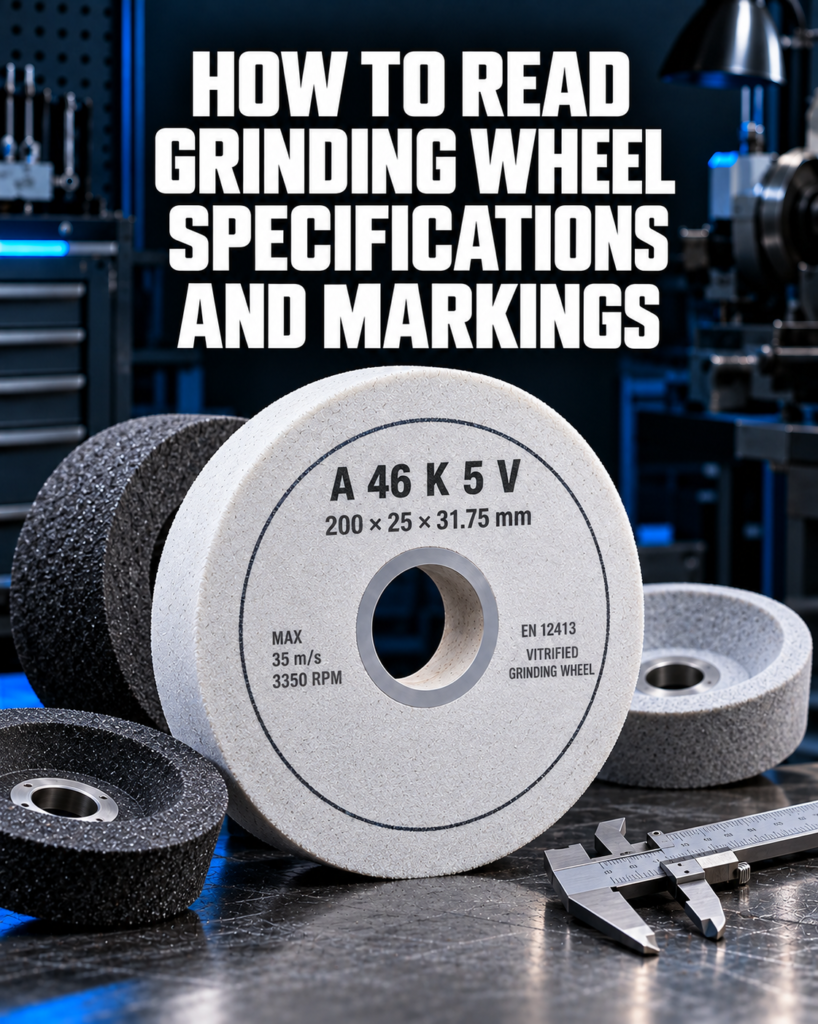
The wheel’s maximum RPM must always be suitable for the machine. It is also essential to inspect the wheel before use and follow the manufacturer’s safety guidance.
Expert Advice from PBR Abrasives
Every grinding application is different, and the correct wheel specification can make a significant difference to performance, safety and operating costs.
If you are unsure which grinding wheel is best for your application, contact PBR Abrasives. Our experienced team can recommend the right wheel based on your material, machinery and required result.